Optimizing Battery Electrode Design Through Impedance Evaluation in Upstream Processes
Identifying Conductive Network Formation Using Slurry and Electrode Sheet Resistance Measurements
As demand for high-performance lithium-ion batteries increases, optimizing electrode sheet design has become a critical challenge in research and development. Battery performance is strongly influenced by the internal conductive network formed during electrode sheet fabrication. This network originates at the slurry stage and evolves through electrode sheet formation.
Traditionally, optimization of conductive additives in slurry recipes has relied on repeated cell fabrication and performance testing. This approach is time-consuming, costly, and inefficient. By enabling direct evaluation of electrical properties at earlier stages, researchers can significantly improve development efficiency while reducing reliance on trial-and-error processes. Hioki provides such a solution: the combined use of the Slurry Analytical System SA2634 and Electrode Resistance Measurement System RM2610.
Background: Conductive Network Formation in Electrode Slurry
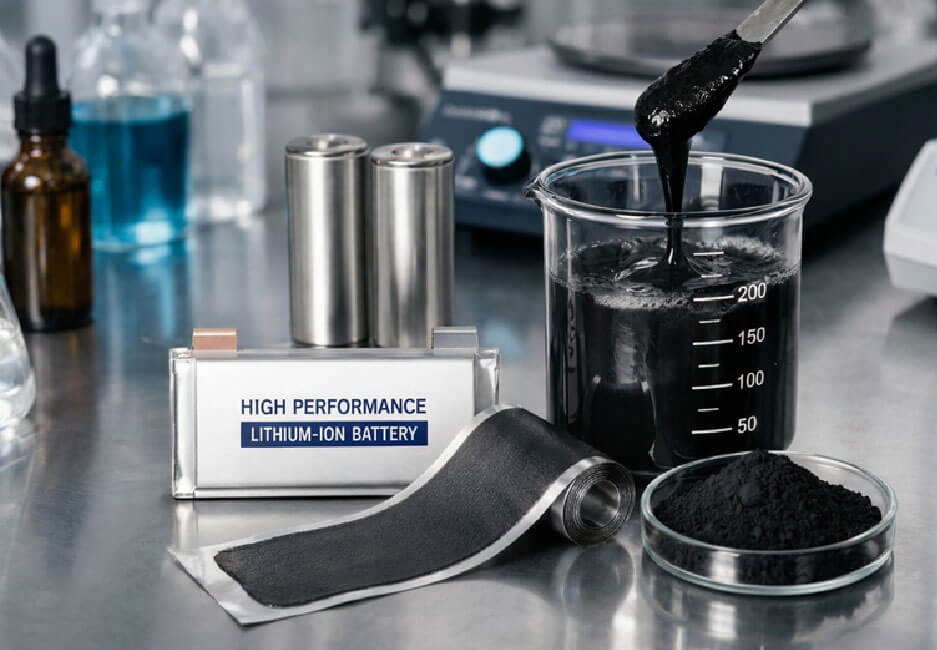
Electrode slurries consist of active materials, conductive additives, and binders dispersed in a solvent. Within this system, conductive additives form electron pathways that determine the electrical conductivity of the final electrode sheet.
A critical concept in this process is percolation. When the concentration of conductive additives exceeds a certain threshold, a continuous conductive network forms, resulting in a sharp drop in impedance. Below this threshold, conductivity remains insufficient, while excessive additive content reduces the proportion of active material and negatively impacts battery capacity.
Challenges in Conventional Development Methods
In conventional electrode development workflows, researchers face several limitations:
- Lack of measurement methods for slurry conductivity
- Difficulty evaluating composite layer resistance in electrode sheets
- Inability to evaluate interface resistance in electrode sheets (surface resistance between current collector and composite layer)
- Dependence on cell fabrication for performance validation
- Increased development time and cost due to repeated iterations
Thus, the inability to quantitatively assess conductivity at both the slurry and electrode sheet stages significantly hindered development efficiency.
Integrated Measurement Solution from Hioki
The combination of the slurry analysis system and the electrode resistance measurement system provides a comprehensive approach to evaluating electrical properties from slurry to electrode sheet. With the slurry analysis system, researchers can directly measure slurry impedance and identify the formation of conductive networks. The electrode resistance measurement system complements this by quantifying the composite layer resistivity and interface resistance between the electrode sheet’s current collector and composite layers.
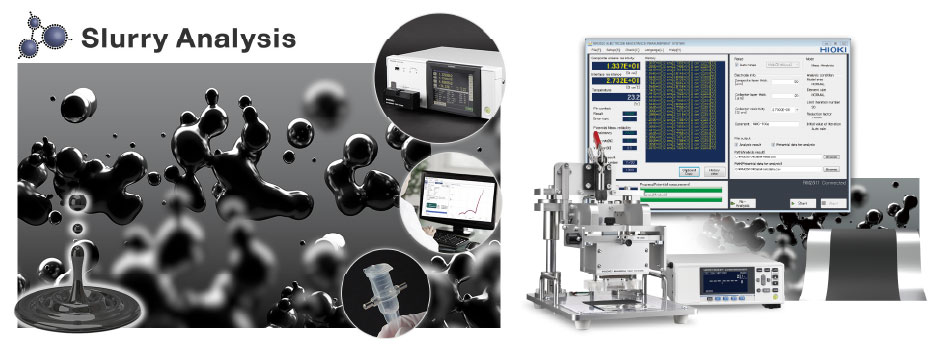 Fig. 1. Hioki’s Electrode Resistance Measurement System RM2610 and Slurry Analytical System SA2634.
This integrated approach allows users to analyze how material composition affects both intermediate and final electrical characteristics.
Measurement Results and Interpretation
Using these systems, experiments were conducted with varying conductive additive ratios under controlled conditions (NCM:AB:PVDF = 100:x:3, AB ratio from 0.5 to 4.0).
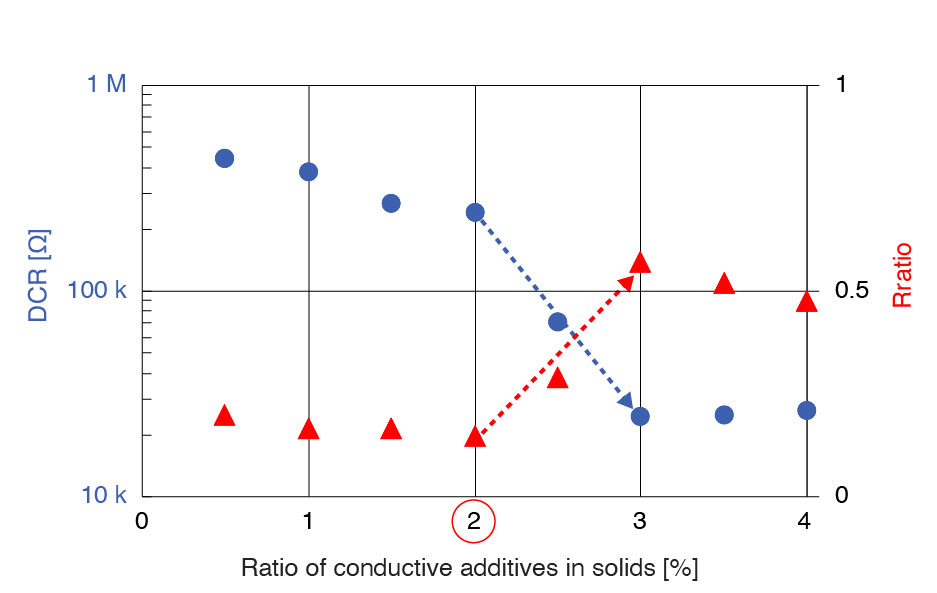 Fig. 2. Relationship between conductive additive ratio in solids (w/w%) and slurry DCR/Rratio
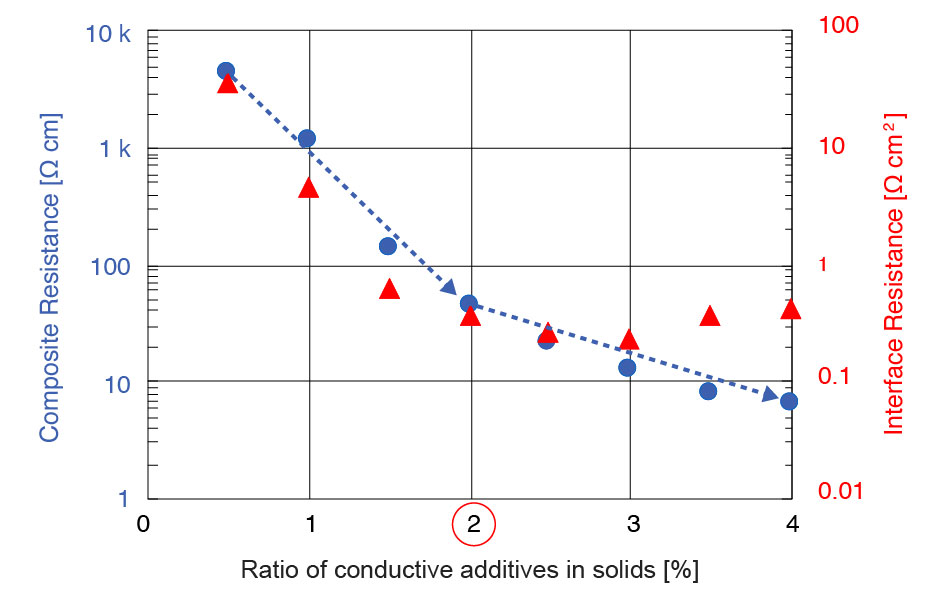 Fig. 3. Relationship between the ratio of conductive additives in solids [w/w%] and the composite layer resistivity and interface resistance of electrode sheets.
Measurement Results
- Slurry impedance (DCR) decreases gradually with increasing conductive additive ratio, followed by a sharp reduction near an additive ratio of approximately 2%.
- Over the same composition range, Rratio* increases markedly, indicating a growing contribution of conductive additive pathways to total electron conduction.
- Electrode sheet measurements show corresponding reductions in both composite resistivity and interface resistance near this composition.
- *:In slurry impedance analysis, Rratio (resistance ratio) is a dimensionless indicator representing the proportion of total slurry resistance attributable to conductive additive pathways. It ranges from 0 to 1, where higher values indicate a greater contribution of conductive networks to overall electron transport. As conductive additives form a continuous network, Rratio increases, reflecting improved electronic connectivity within the slurry.
Observed trends
- The abrupt change in both DCR and Rratio indicates a transition in the dominant conduction mechanism within the slurry.
- Electrode resistance components exhibit minimum values in the same additive ratio range, suggesting structural continuity between slurry-state conductive networks and the final electrode sheet.
Interpretation
These results indicate that the conductive additive percolation threshold occurs at approximately 2% additive content. At this point, a continuous conductive network forms within the slurry, which is preserved through electrode fabrication. This composition represents the minimum conductive additive amount required to achieve efficient electron transport without unnecessarily reducing active material content.
From these results, it was demonstrated that the slurry analysis system can grasp the relationship between conductive auxiliary amount and conductive network formation at the slurry stage, and that the electrode resistance measurement system can quantitatively confirm how the network is maintained within the electrode sheet and reflected in the final resistance characteristics. By combining both systems, you can consistently evaluate everything from slurry formulation to electrode sheet characteristics, greatly improving optimization efficiency in the upstream electrode design process.
Conclusion
Optimizing conductive additive content is essential for achieving high-performance battery electrodes. However, conventional methods relying on downstream evaluation are inefficient and resource-intensive.
The combined use of the Slurry Analytical System SA2634 and the Electrode Resistance Measurement System RM2610 enables direct, quantitative analysis of electrical properties from slurry to electrode sheet. This upstream evaluation approach not only improves development efficiency but also enhances the accuracy of material optimization.
For R&D teams aiming to accelerate battery innovation and reduce development costs, adopting this advanced measurement solution offers a powerful advantage.
For detailed product information, please visit our website. For a demonstration or consultation on a specific application, please contact us.