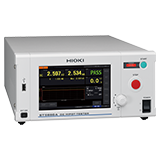
Eliminate False PASS in Battery Module and Battery Pack DC Hipot Tests
Make DC Hipot testing more trustworthy
Battery modules and packs must not leave the line with hidden insulation defects. Yet in real production, broken leads or poor probe contact can easily produce a false pass in a DC hipot test — no current flows, the tester “sees” no leakage, and defective products slip through.
The result: costly rework on high value‑added assemblies, post‑shipment replacement risk, and potential safety incidents in the field.
The ST5680A DC Hipot Tester solves this with an integrated contact check that runs without adding takt time. You get insulation test results you can actually trust — at full production speed.
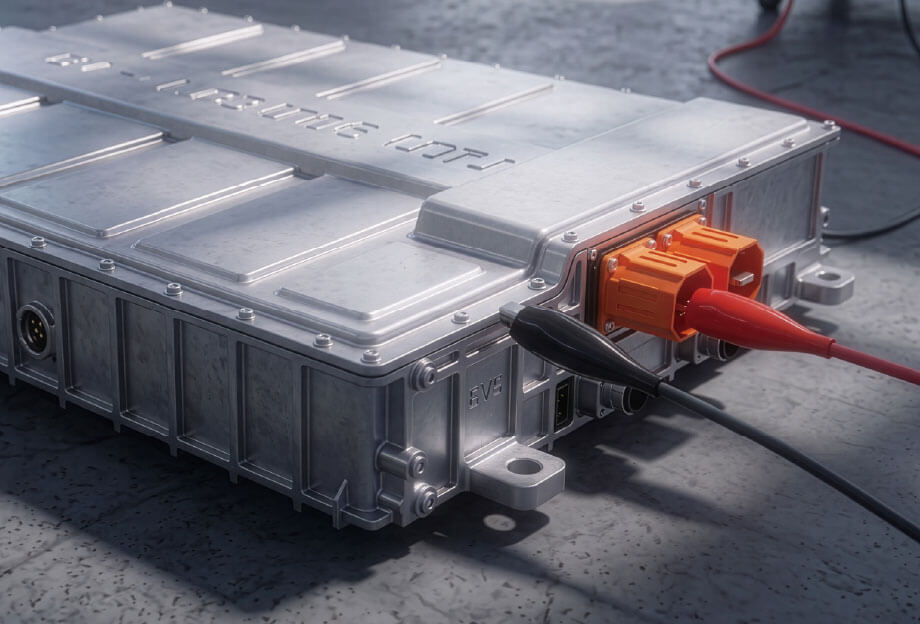
Why battery modules and packs need better contact verification
Compared with single cells, battery modules and battery packs:
- Integrate multiple cells and components
- Have already consumed significant materials, labor, and time
- Carry far higher rework and replacement costs
A single false PASS at the module or pack stage can mean:
- Complex and expensive rework at the final inspection stage
- Post‑shipment replacement or field corrective action
- Direct impact on safety and brand reputation
For these products, hipot testing results must be unquestionable — especially the contact integrity between tester and DUT. Conventional countermeasures fall short:
- Lower current limit as a contact check → easily fooled by low‑leakage DUTs
- External resistance meter → extra equipment, extra time, extra complexity
- Simple insulation resistance check → can’t reliably distinguish “good insulation” from “no contact”
The trade‑off has been clear: higher reliability vs. higher cost and slower takt.
The ST5680A breaks this trade‑off.
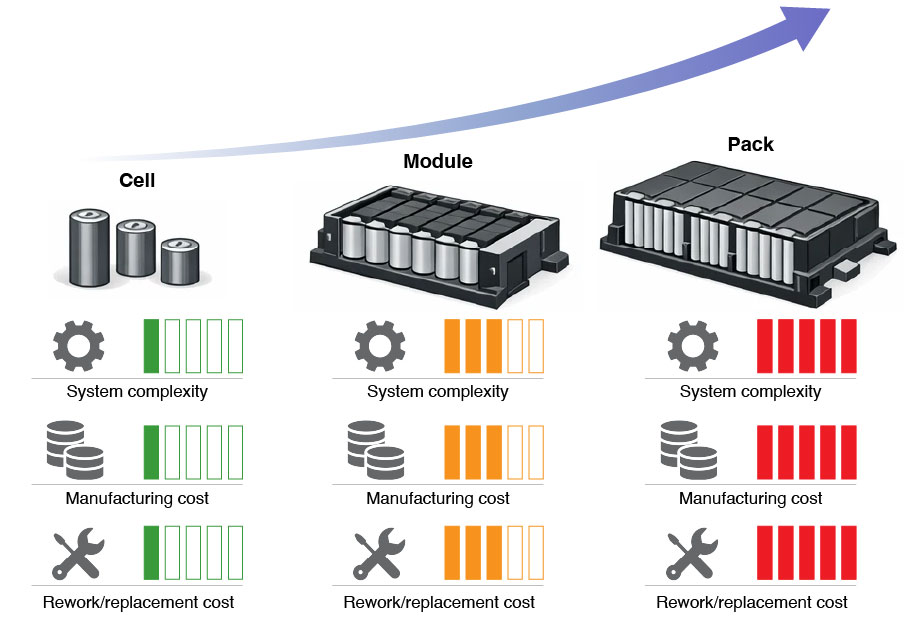
False PASS missed in module/pack processes increases post-shipment burden and risk
The ST5680A approach: contact check with zero extra takt time
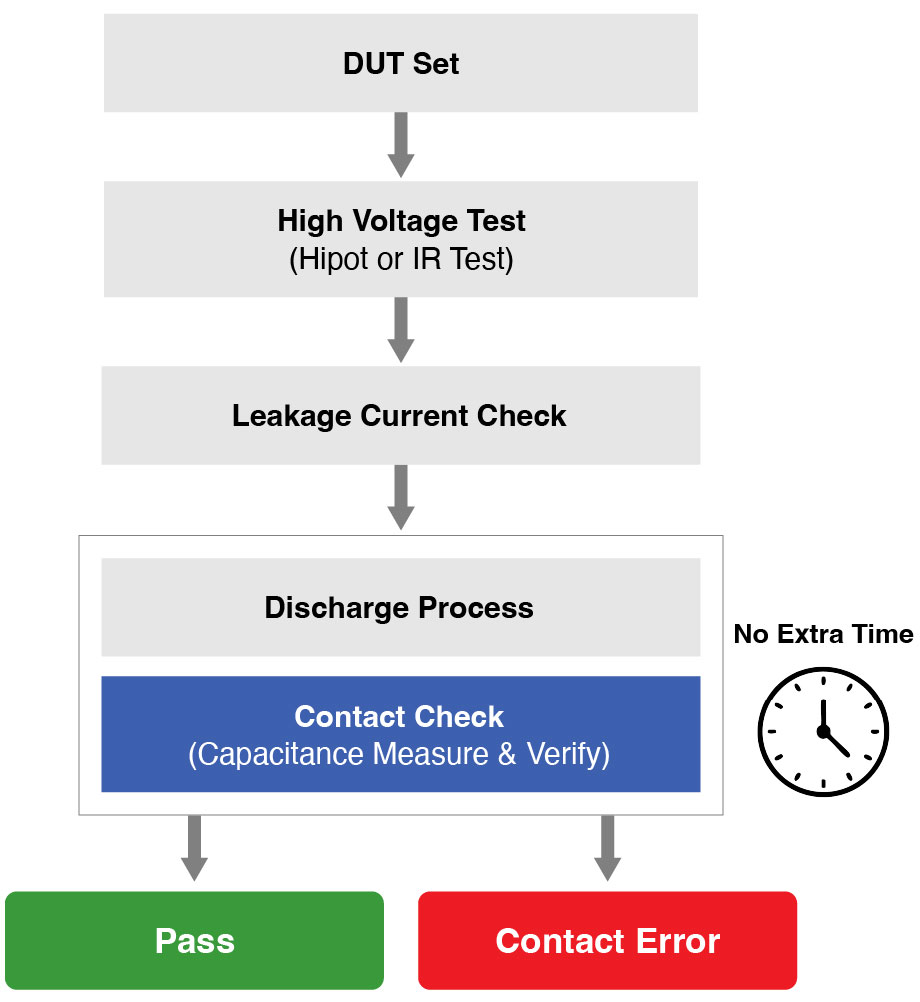
The ST5680A uses a smart capacitance‑based contact check that runs inside the DC hipot / insulation resistance test sequence.
How it works:
- 1.After the DC high voltage test, the DUT is discharged (a process that is mandatory anyway).
- 2.The ST5680A monitors the discharge voltage decay over time.
- 3.From the time constant, it calculates the electrostatic capacitance between the measurement terminals.
- 4.If the calculated capacitance falls below a user‑set threshold, the tester flags contact errors ("Contact Error").
Key advantages:
- Zero additional takt time: Uses the existing discharge process — no extra step.
- Robust for high‑insulation DUTs: Works where current‑based judgment alone is unreliable.
- Direct detection of bad contact: Catches lifted probes and broken leads that can cause false PASS.
A PASS result now means more than “no leakage detected” — it means “good insulation, good contact, verified.”
Simple configuration: From setup to stable mass production
The ST5680A’s contact check is designed for quick setup and stable use in mass production.
1. Turn ON the contact check
- Menu path: [SET] → [COMMON] → STATE = ON
- Contact check is now automatically executed during the discharge phase.
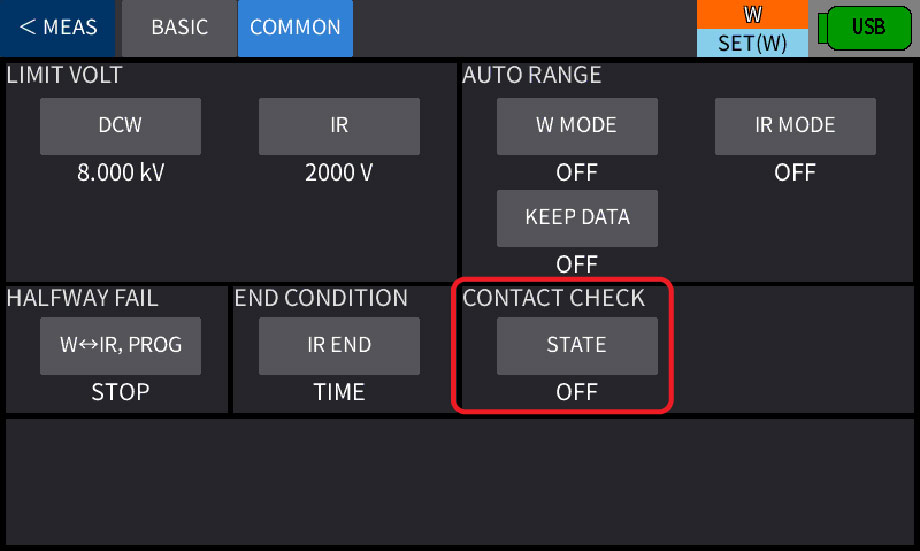 Contact check function ON/OFF
2. Register offset (No‑DUT correction)
- Open the [ADJ] screen with no DUT connected.
- Measure and store the offset value (capacitance of fixtures, cables, wiring).
- During operation, the tester evaluates the corrected capacitance, defined as (Measured capacitance - Offset value), rather than the raw measured value.
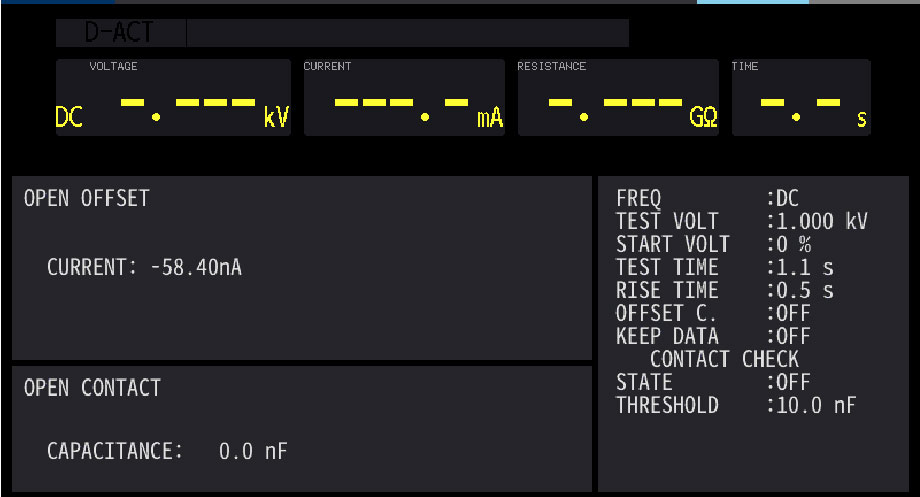 Acquiring correction values
3. Set the capacitance threshold
- Menu path: [SET] → [BASIC] → [C.CHECK]
- Run a test under normal, good‑contact conditions and observe the corrected capacitance.
- Set the threshold slightly below this typical value.
Judgment logic:
- Corrected capacitance ≥ Threshold → Contact OK (Capacitance monitor: CONTACT x.x nF)
- Corrected capacitance < Threshold → Contact error (Capacitance monitor: CONTACT ERR x.x nF)
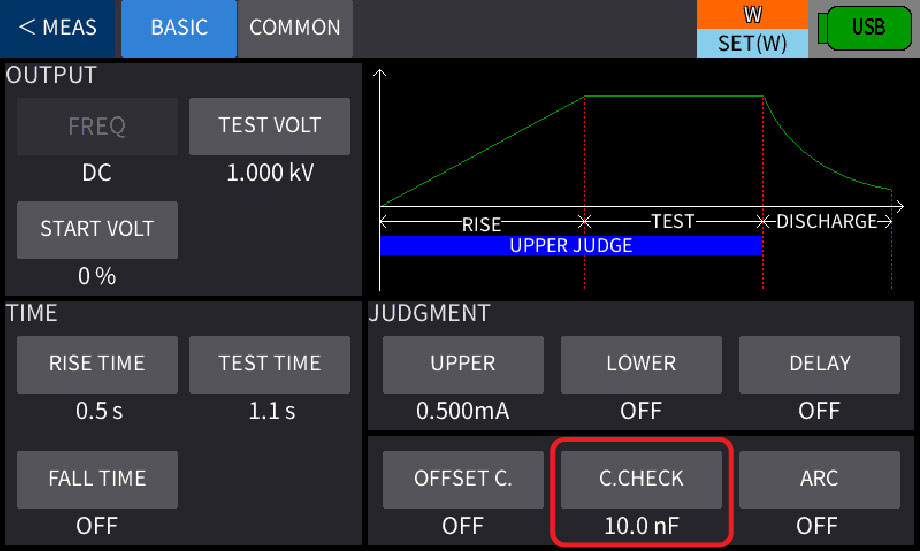 Setting the capacitance threshold for contact check
4. Run the test as usual
- Execute DC hipot or insulation resistance tests in your normal sequence.
- During testing and discharge, the measured capacitance is displayed.
- The ST5680A automatically subtracts the offset and compares the corrected value to the threshold.
- The JUDGE display shows the contact check result; even if the DC hipot/insulation resistance test is PASS, a capacitance value below the threshold — typical of a lifted probe or a broken lead — will immediately trigger UPPER LOWER FAIL.
Once configured, these settings can be saved and reused for specific battery module or pack models, ensuring consistent testing across shifts, lines, and sites.
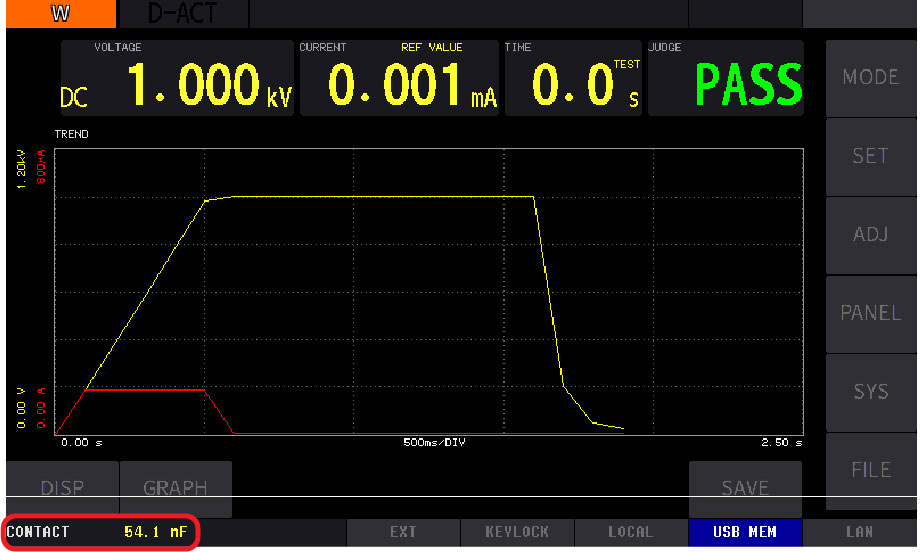 Measurement using the contact check function (DC hipot test)
What you gain on the production line
Integrating contact check into the DC hipot test with the ST5680A delivers clear production and QA benefits for battery modules and packs:
Stop false PASS at the source
- Detect broken leads and poor probe contact before they cause escapes.
- Make hipot results convincingly reliable.
Cut rework in final inspection
- Reduce the number of defective modules and packs discovered late.
- Shrink backtracking, re‑inspection, and line disruption.
Lower post‑shipment and field risk
- Decrease insulation‑related field failures.
- Protect customers and safeguard your brand.
Keep takt time and throughput intact
- No added test step, no takt time penalty.
- No need for external resistance meters or extra high‑voltage fixtures.
Reduce total test system cost
- Fewer instruments, simpler wiring, easier maintenance.
- A cleaner, more reliable test architecture.
Conclusion: A DC Hipot tester built for battery modules and packs
For manufacturers of battery modules and battery packs, the cost of a single missed insulation defect is high. A conventional DC hipot tester alone cannot reliably prevent false PASS due to poor contact.
The ST5680A DC Hipot Tester changes this by:
- Embedding contact check in the discharge process with zero takt time impact
- Using capacitance‑based judgment to reliably detect poor contact
- Delivering higher confidence in every PASS decision
- Helping reduce rework, replacement risk, and total inspection cost
For detailed product information, please visit our website.
If you are considering how to improve the reliability of DC hipot testing for battery modules and packs, or how to implement the ST5680A on your production lines, please contact us via the inquiry form on the Hioki website.
Based on your current test conditions and line configuration, we will propose the most suitable solution for your production environment.