Verify the Energy Savings Created By Photovoltaic (PV) Systems
How is Energy Savings Measured?
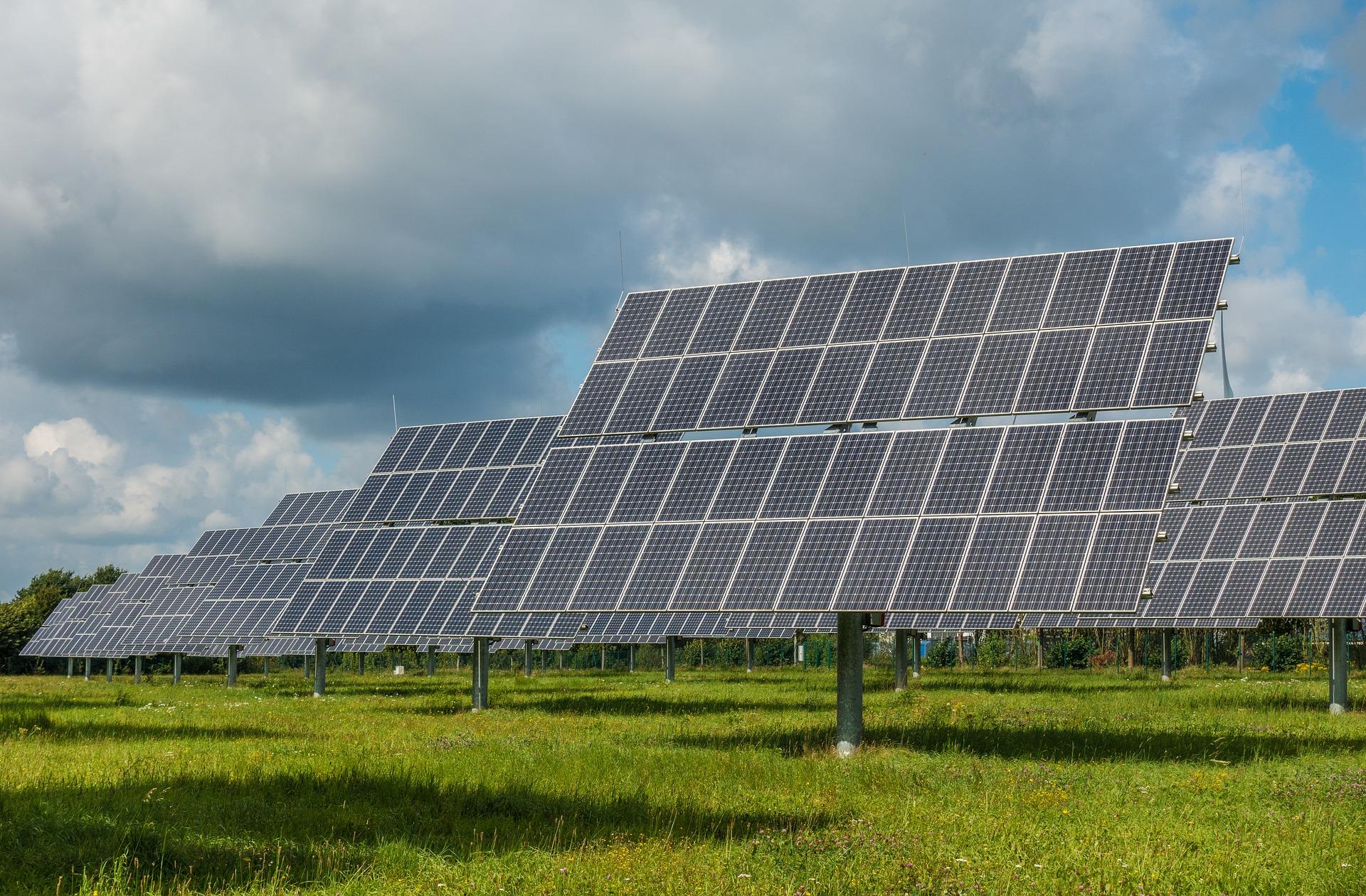
The process of measuring energy savings is known as “Measurement & Verification” or “M&V” whereby measurement technologies are used to reliably identify the actual savings created as a result of energy saving measures. Although energy savings cannot be directly measured because that represents the absence of energy consumption, you can determine the effects of energy saving measures by comparing the energy cost before and after the installation of new equipment such as a solar or photovoltaic (PV) panels.
M&V activities include, among others:
• Installing meters
• Gathering data
• Developing computation methods to analyze data and plotting it against energy rates
• Reporting and quality assurance efforts
Often it is necessary to report to a customer or third party of the effects of the energy saving measures; in any case, it is always wise to verify that any new installed equipment is successful in cutting energy costs.
Measuring and Computing Cost Savings
When verifying the effectiveness of PV equipment in reducing energy costs, the simplest way is to compute savings in monetary units based on the same energy usage before and after the installation. This method is sufficient for a typical household. However, large industrial facilities that invest heavily in energy savings equipment operate on a scale such that close monitoring of power consumption and energy conversion can lead to huge savings. In addition, some power utilities provide incentive programs to buy back any excess energy a PV system generates. This further increases the savings, but complicates the computations even more.
What Type of Power Meter Should be Used to Measure Energy Savings?
1. Present demand and energy fluctuation graphs showing hourly energy production and consumption
2. Measure and present equipment output in terms of voltage and frequency changes
3. Measure the amount of electricity purchased from and sold to the utility company
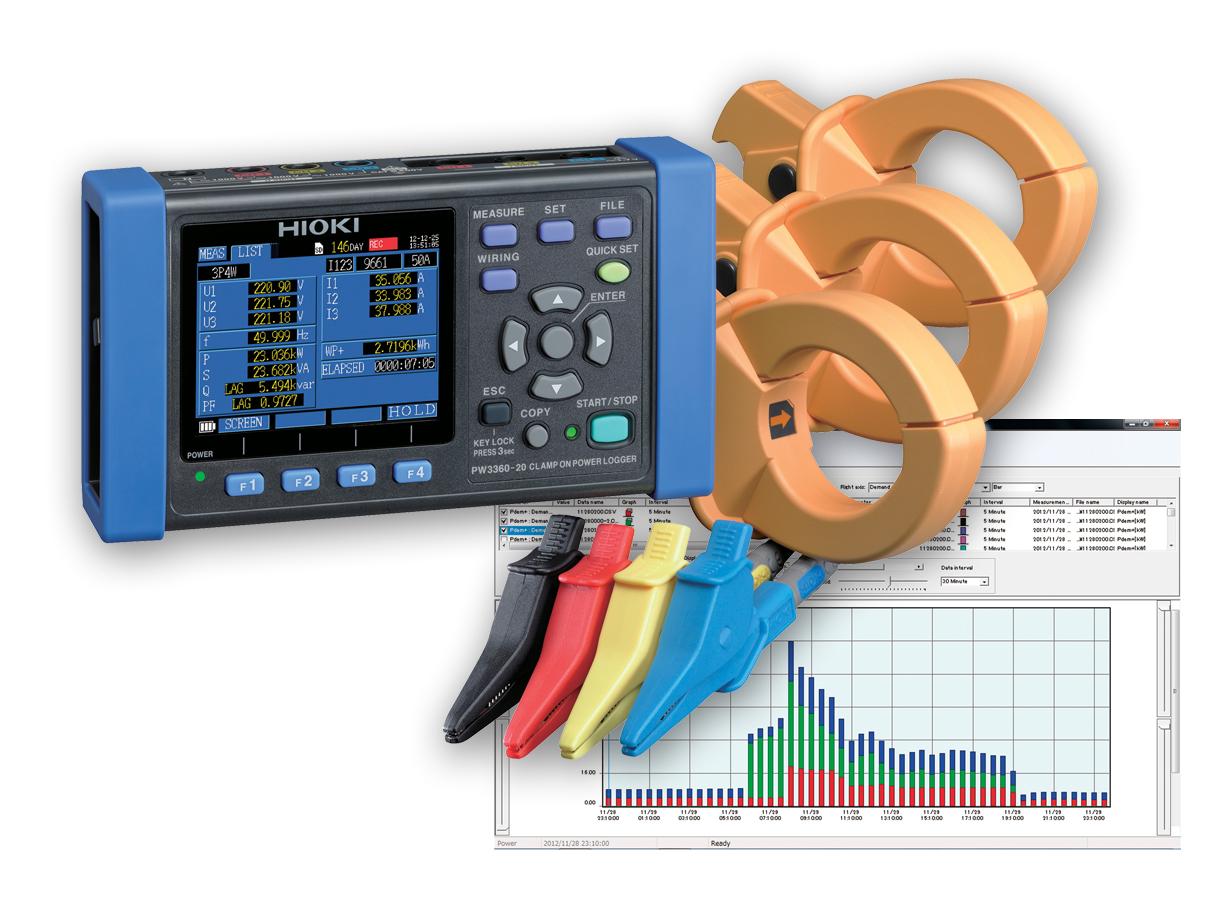
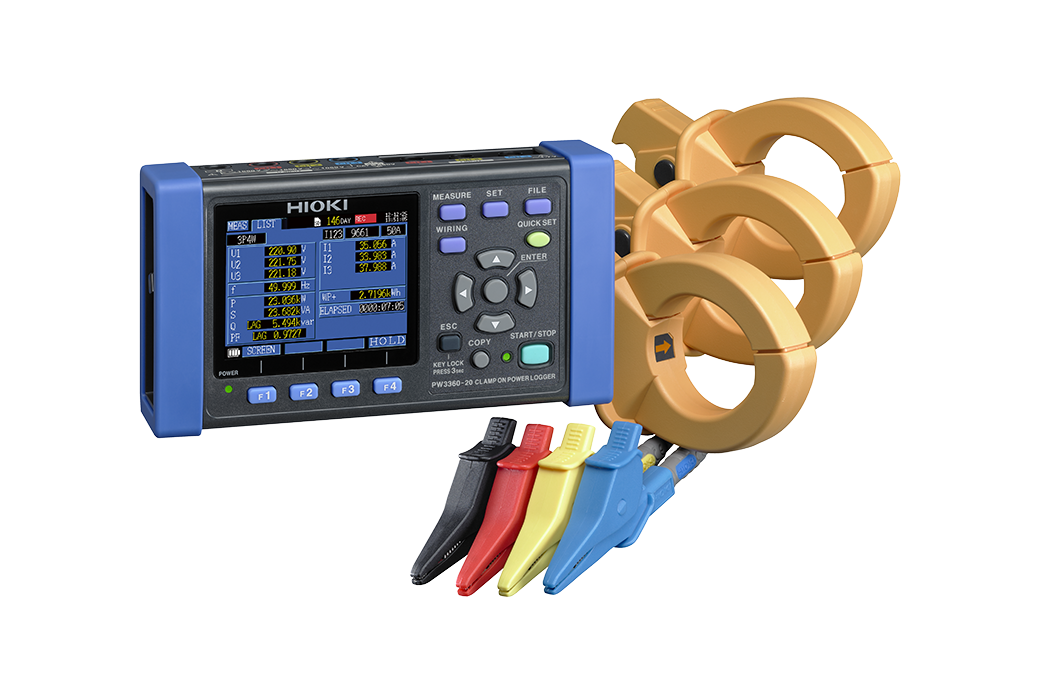
A Solution in the HIOKI PW3360 Clamp On Power Logger
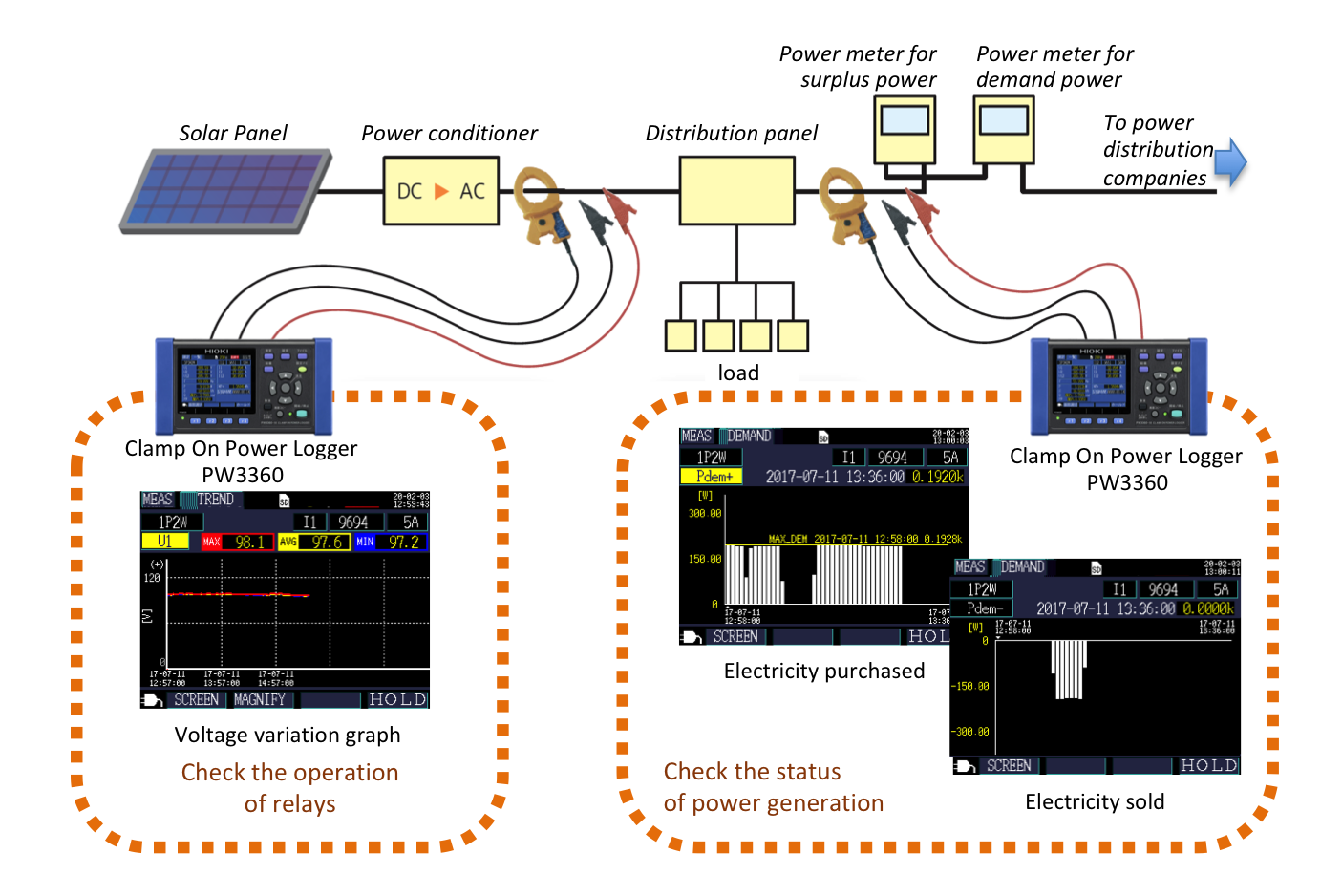
1. Measure between the distribution panel and utility meter the amount of electricity sold to the utility company and purchased by the customer simultaneously. The data will also enable you to confirm that the PV system is in good operating condition.
2. Compute electricity charges by specifying the unit cost (per kWh) so that the PW3360 can multiply the electricity charge unit cost by the active energy (power consumption) WP+ value.
3. Measure the output of the system’s power conditioner to display voltage and frequency changes in order to verify correct operation of relays.
4. Use the demand and energy fluctuation graphs to verify operation of the PV system in real time and make equipment adjustments where necessary to continuously optimize the system.
Advanced Energy Analysis
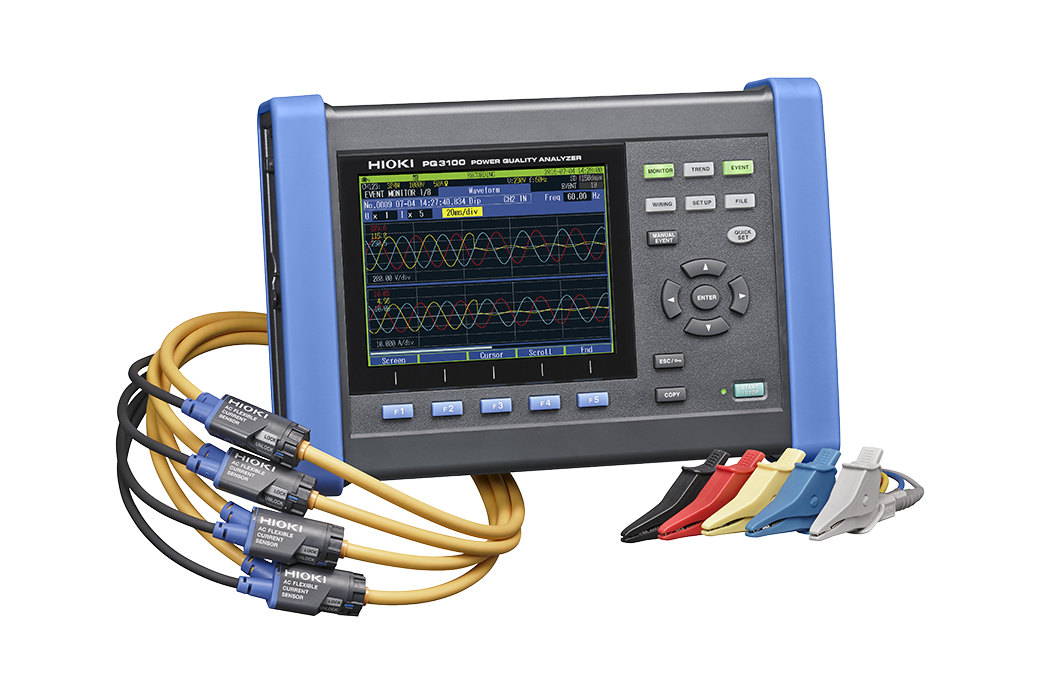
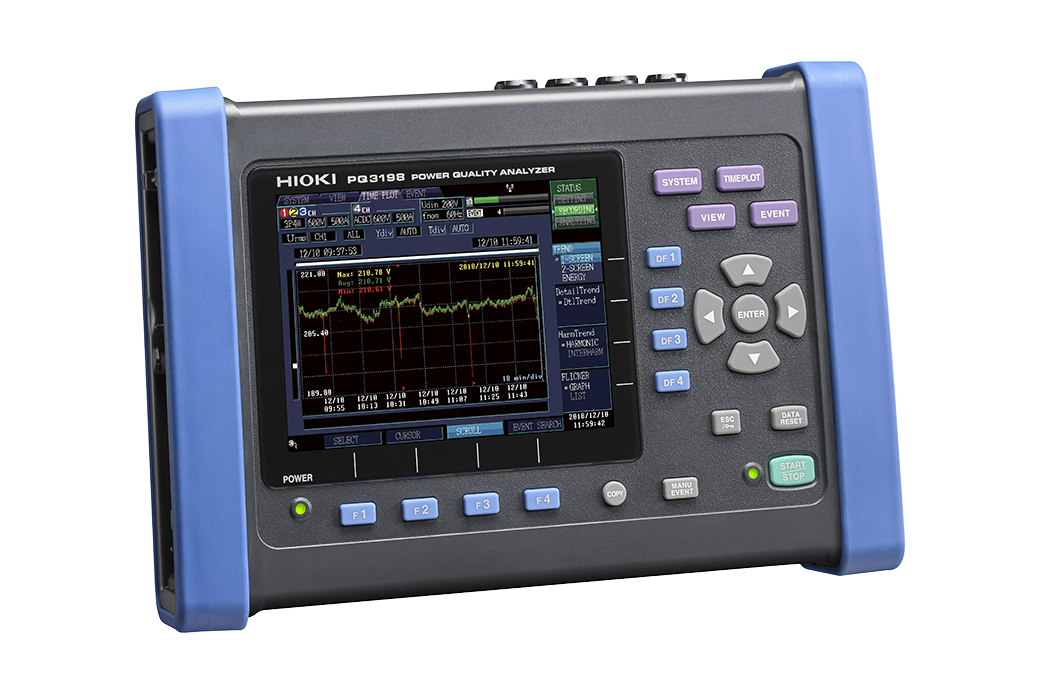
For more advanced surveys of power quality, we recommend the HIOKI PQ3198 or the PQ3100.