


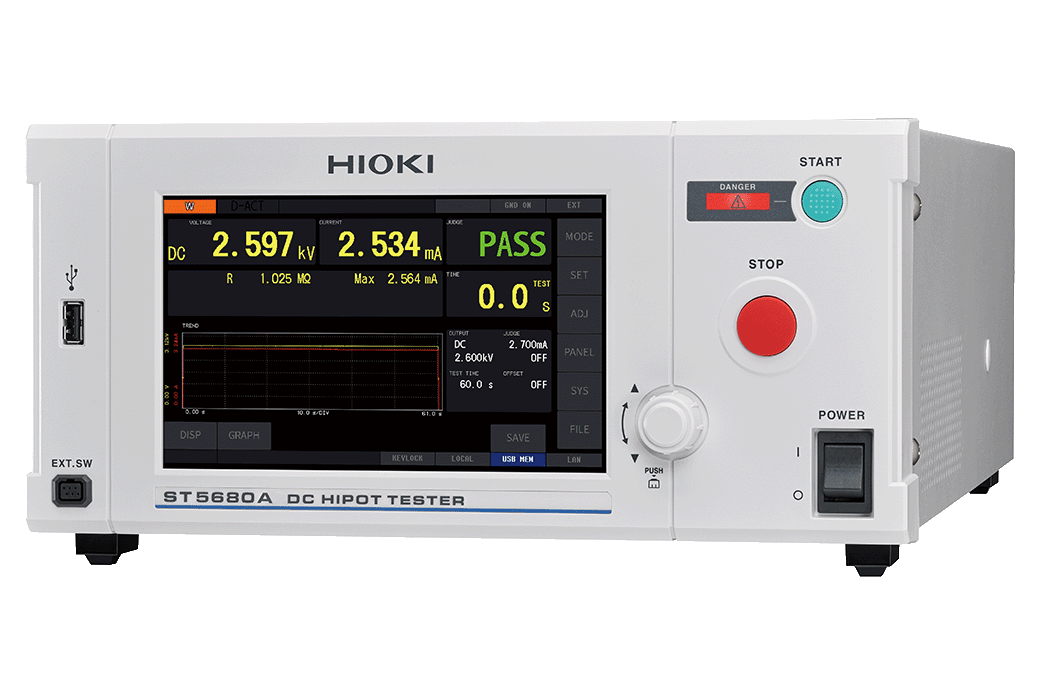
DC HIPOT TESTER ST5680A
Bring Waveform Intelligence to Safety Testing.
Accelerate EV Battery Quality with DC Hipot Analysis.
NEW
-

-

-

-
 Optional
 -
 Optional
 -
-

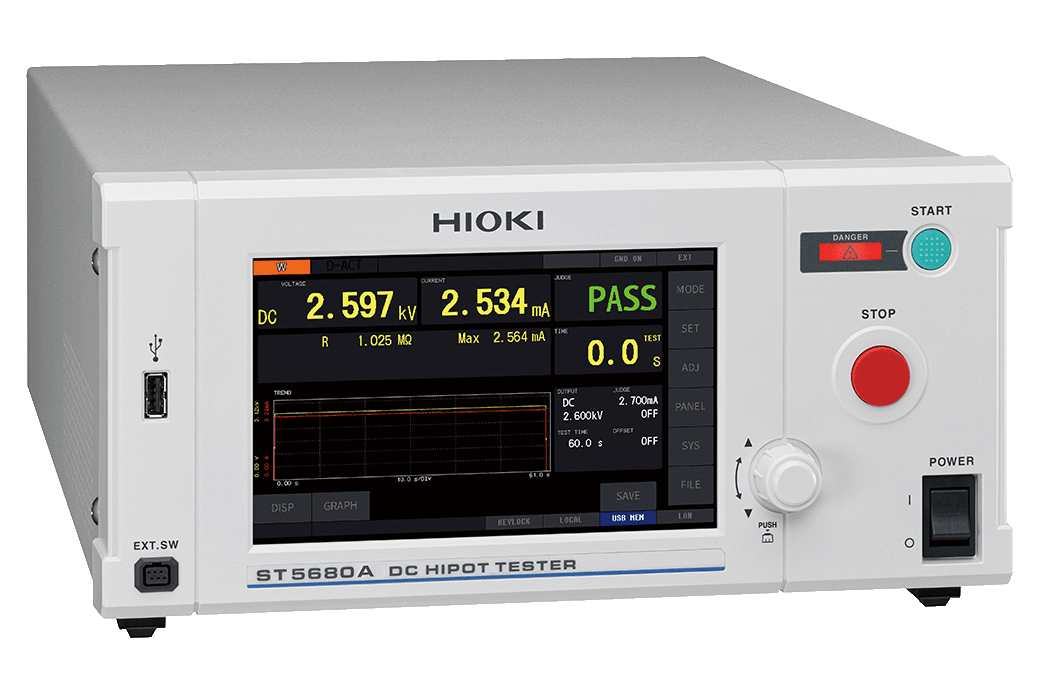
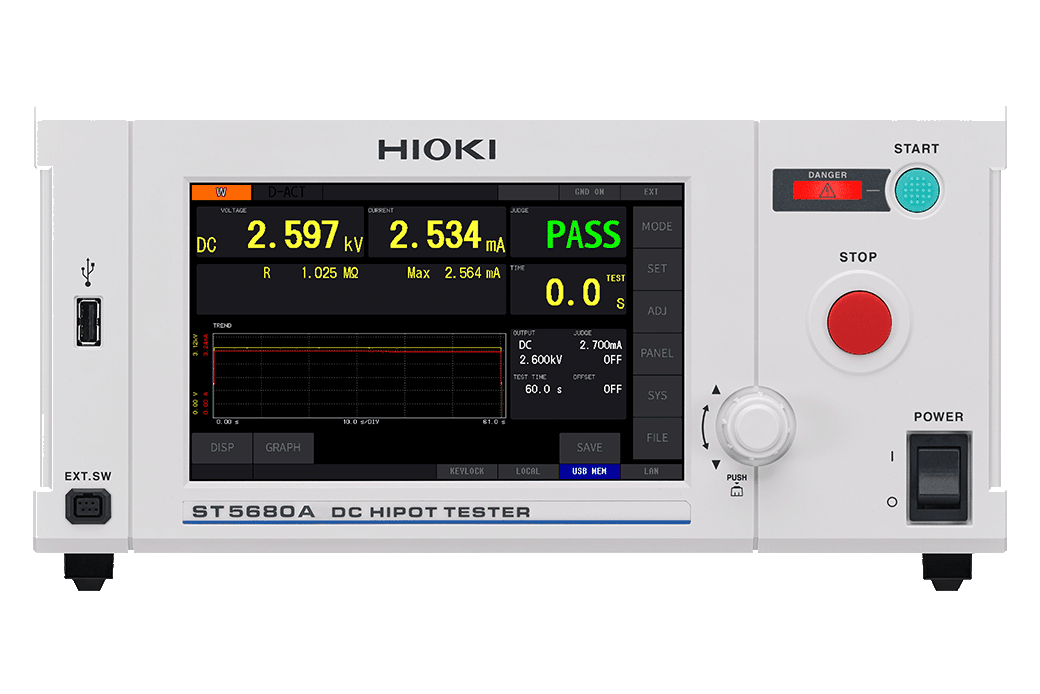
Ship defect-free EV battery cells faster and with confidence. For battery engineers, the ST5680A streamlines safety testing by revealing latent insulation issues early. As a DC hipot tester, it visualizes insulation breakdown with clear waveforms so flaws are caught before leaving the factory.
The ST5680A DC Hipot Tester advances hipot testing along three axes: global compliance, contact check, and waveform‑based analysis. It is designed for hipot testing between enclosures and electrodes across EV battery cells, modules, and packs, from laboratory validation to mass‑production lines.
Global Compliance and Waveform Analysis in a Single DC Hipot Tester
The ST5680A performs DC hipot (max. resolution: 0.001 µA), insulation resistance, and breakdown voltage (BDV) testing while displaying and recording voltage, current, and insulation resistance as time‑series waveforms.
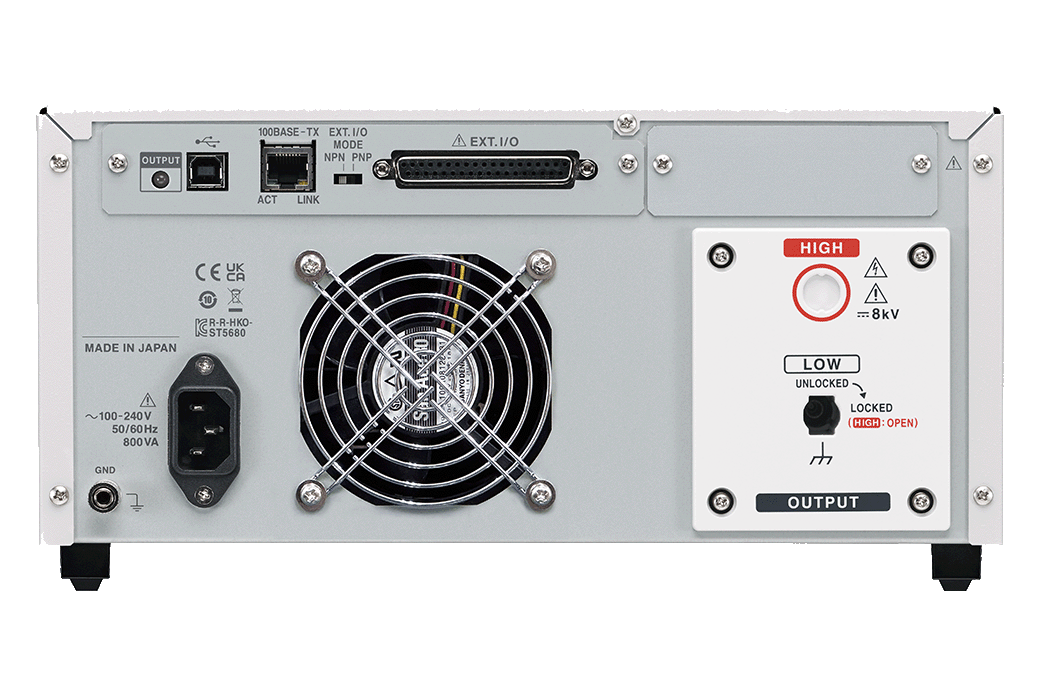
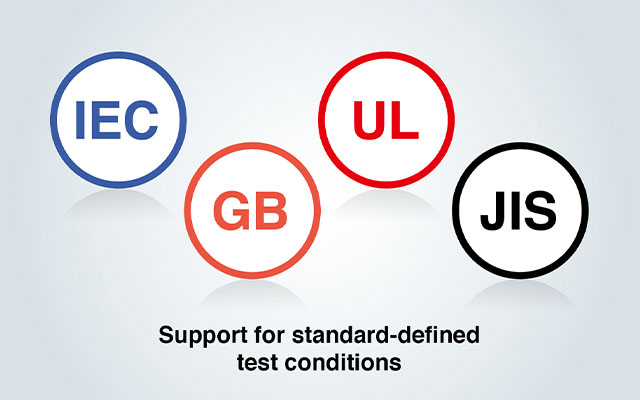
With CE, UKCA, and CSA (NRTL) certifications and output up to 8 kV/20 mA, it satisfies DC hipot test conditions defined by international standards, enabling standardization with the same model worldwide.
A built‑in capacitance‑based contact check function helps prevent false PASS due to poor contact, while Arc Detection monitors test‑voltage fluctuations to detect latent insulation defects caused by contaminants or burrs.

Key Features
- Global compliance for unified EV battery test platforms
- Built‑in contact check to prevent false PASS
- Waveform‑based analysis without extra equipment
- Safe and repeatable daily high‑voltage testing
Model No. (Order Code)
| ST5680A |
|---|
Due to the specialized connector design, the ST5680A is not compatible with commercially available leads (BNC, coaxial, etc.) or Hioki 9615 test leads.
Global Compliance & Unified Test Platforms
Standardize DC hipot testing across global EV battery sites with one platform.
- CE, UKCA, and CSA (NRTL) certifications for worldwide use
- Up to 8 kV/20 mA to satisfy standard‑defined DC withstand voltage tests
- Easier global standardization of test recipes, criteria, and procedures
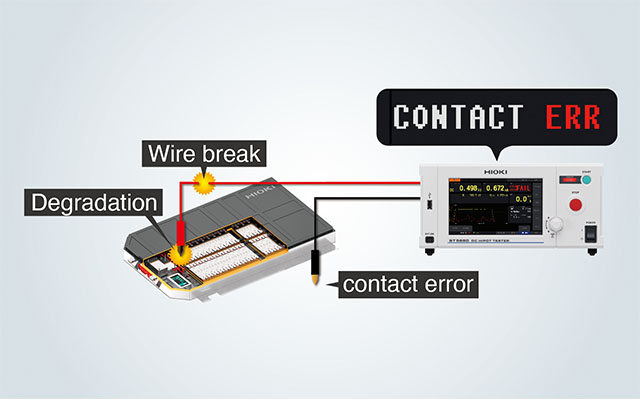
Built‑in Contact Check for Quality Improvement & Design Cost Reduction
Detect poor probing without external continuity hardware or complex sequences.
- Capacitance‑based contact check built into the tester
- Detects degradation or disconnection of jigs, leads, and high‑voltage relays
- Reduces risk of false PASS due to poor contact on high‑value modules/packs
- Simplifies wiring and PLC design, shortening line start‑up and debug time
Waveform-based Analysis for Higher Efficiency & Lower Cost
Capture waveforms directly on the tester for faster, more reliable analysis.
- Records voltage, current, and insulation resistance as time‑series waveforms built into the tester
- Up to 128 s recording at up to 500 kS/s
- Save data via USB or LAN in BMP/PNG/CSV formats
- Analyze failures under actual line conditions without oscilloscope or HV probe
Safe and Repeatable Daily High‑Voltage Testing
Functions that support safe, repeatable operation on production lines.
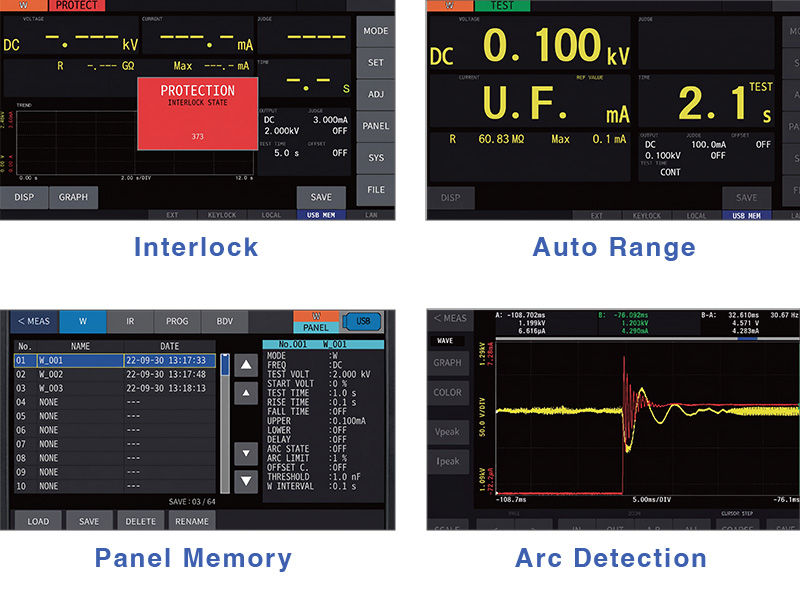
- Voltage limitation (Limit Voltage Value) prevents over‑voltage from incorrect test settings, reducing accidents and rework risk.
- Automatic Discharge switches to internal discharge after testing, lowering the risk of accidental contact with charged DUTs.
- Interlock makes it easy to link output enable/disable with guards, door switches, and other safety devices.
- Auto Range keeps readings easy to see and reduces misread risk for operators.
- Panel Memory stores frequently used test conditions (up to 64 sets per mode) for quick recall and faster changeovers.
- Arc Detection continuously monitors test‑voltage fluctuations and detects abnormal events based on the rate of change in test voltage, helping identify latent insulation defects caused by contaminants or burrs.
Basic Specifications
For detailed measurement accuracy, temperature coefficients, and I/O signal assignments, refer to the instruction manual and brochure.
| Main functions | DC hipot test, Insulation resistance test, Breakdown voltage (BDV) test, Waveform display function, Arc detection, Contact check function |
|---|---|
| Operating temperature and humidity range | 0°C to 40°C (32°F to 104°F), 80% RH or less (non-condensing) |
| Standards | Safety: IEC 61010 EMC: EN 61326 |
| Power supply | 100 V to 240 V AC, 50 Hz/60 Hz |
| Power consumption | Approx. 180 VA (220 V, DC hipot test mode, 2.5 kV, 5 mA load current) |
| Maximum rated power | 800 VA |
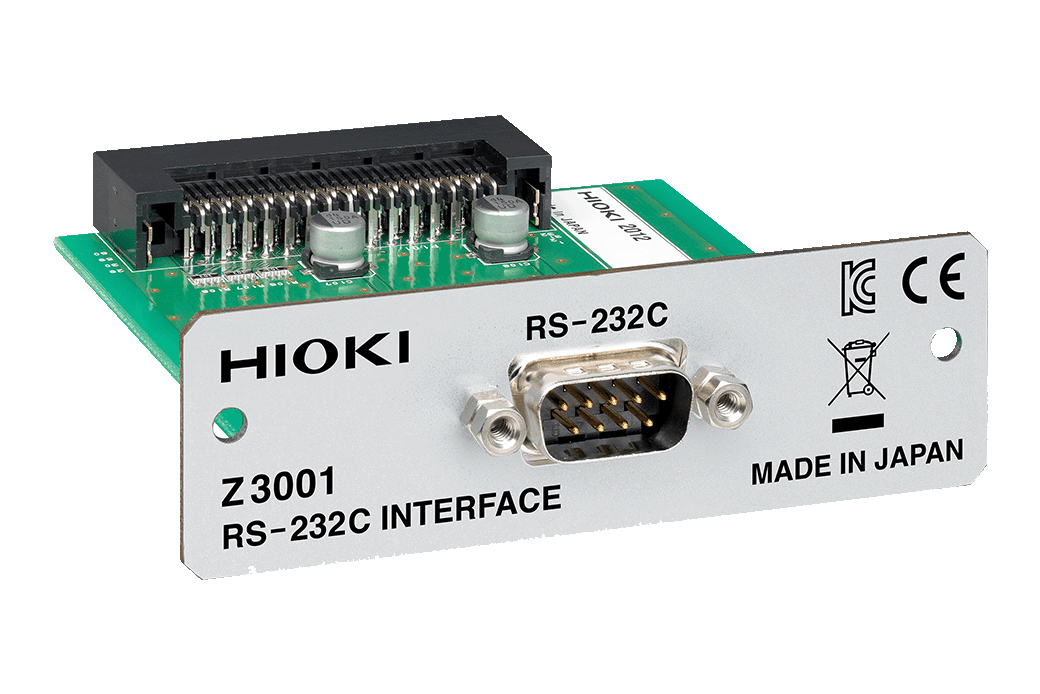
| Interface | USB, LAN, EXT. I/O Optional: RS-232C (Z3001), GP-IB (Z3000) Memory: USB drive |
| Dimensions and mass | Approx. 305 mm (12.01 in.) W × 142 mm (5.59 in.) H × 430 mm (16.93 in.) D (excluding protrusions) Approx. 10.4 kg (366.8 oz.) |
| Included accessories | Power cord ×1, EXT. I/O male connector ×1, EXT. I/O connector cover ×1, Interlock-canceling jig for EXT. I/O ×1, Startup Guide ×1, Operating Precautions (0990A903) ×1 |
Various Tests and Functionality
| DC hipot test | • Output voltage: 0.010 kV DC to 8.000 kV (1 V resolution) • Output setting accuracy: ±20 V (below 3 kV, no load), ±0.4 % of setting ±8 V (3 kV and above, no load) • Output/cutoff current: Max. 20 mA (test voltage 50 V or higher) • Current accuracy: ±1.5% rdg. (typ., see instruction manual or brochure for details) • Minimum resolution: 0.001 µA • Test time: 0.1 s to 999 s, continuous (timer OFF) • Voltage rise/fall time: 0.1 s to 300 s / 0.1 s to 300 s, OFF • Test modes: W to IR, IR to W, Program test |
|---|---|
| Insulation resistance test | • Output voltage: 10 V DC to 2000 V (1 V resolution) • Output setting accuracy: ±20 V (no load) • Resistance display range: 100.0 kΩ to 200.0 GΩ (0.01 kΩ resolution) • Accuracy guarantee range: 100.0 kΩ to 99.99 GΩ • Resistance accuracy: ±1.5% rdg. (see instruction manual or brochure for detailed range‑wise accuracy) • Test time: 0.1 s to 999 s, continuous (timer OFF) • Voltage rise/fall time: 0.1 s to 300 s / 0.1 s to 300 s, OFF |
| Breakdown voltage (BDV) test | • Test methods: Continuous voltage rise test, Stepped voltage rise test • Measurement: Insulation breakdown voltage (kV), Insulation breakdown strength (kV/mm) • Settings: Start voltage, End voltage, Rise speed, Arc detection, Electrode distance, Upper limit current |
| Waveform display function | • Waveforms: Voltage, Current, Insulation resistance • Sampling rate: Max. 500 kS/s • Display length: 0.5 s to 128 s (9 steps) • Memory capacity: 512 k words |
| Arc detection | • Detection method: Monitoring of test‑voltage fluctuations • Setting range: Test‑voltage variability 1% to 50% |
| Contact check function | • Detection method: Capacitance‑measurement method • Setting range: Threshold (capacitance) setting 1.0 nF to 100.0 nF |
| Memory functions | • Waveform / graph save: Destination: USB memory Formats: BMP, PNG, CSV • Panel memory: DC hipot/IR: up to 64 sets each BDV test: up to 10 sets Program test: up to 30 programs (max. 50 steps) • Data memory: Up to 32,000 measured values |
| Judgment functions | • PASS, FAIL (UPPER FAIL, LOWER FAIL) • Judgment output via EXT. I/O and communication |
| Safety and usability functions | • Interlock: links output enable/disable with external safety devices • Automatic discharge: internal discharge after testing (residual voltage 30 V or less) • Voltage limitation:upper‑limit control from 0.010 kV to 8.000 kV • Auto range: automatic range switching based on measured values • Panel memories: store and recall test conditions • Self‑check/Key lock/Command monitor/I/O HANDLER test |
Measurement & Control (4)
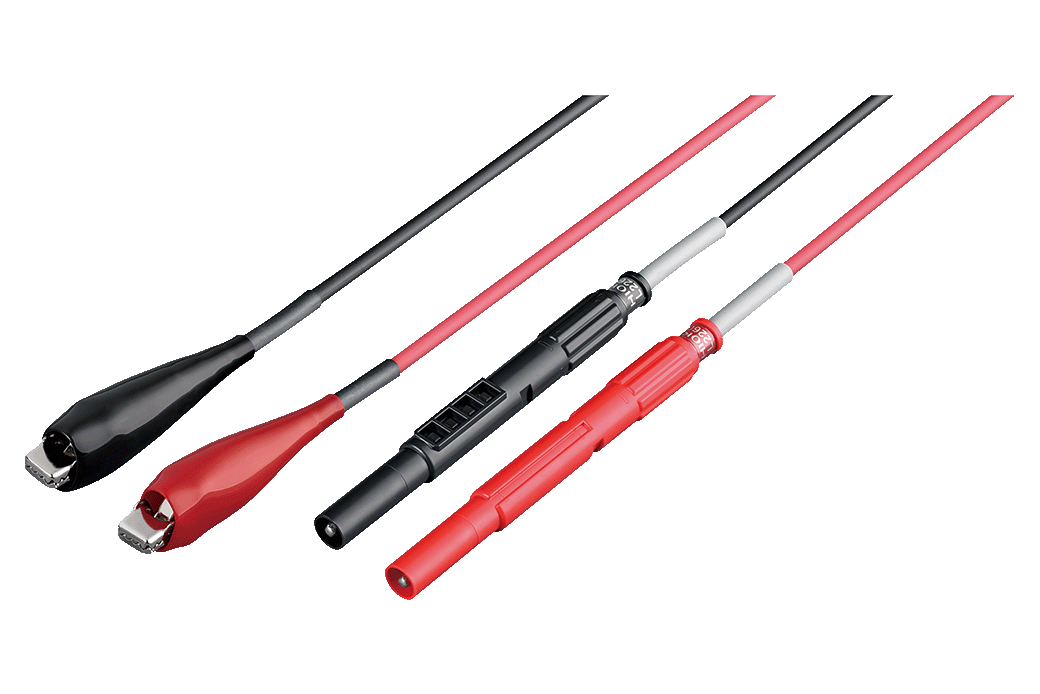
Clip to special connector, red and black, 1.5 m
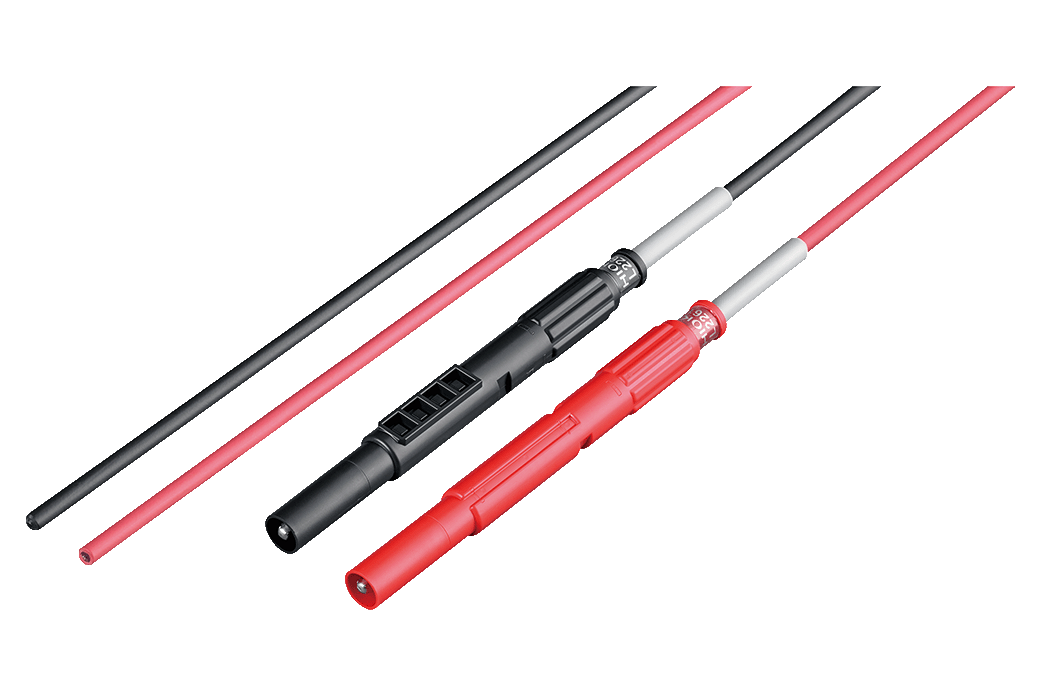
Bare wire to special connector, red and black, 5 m
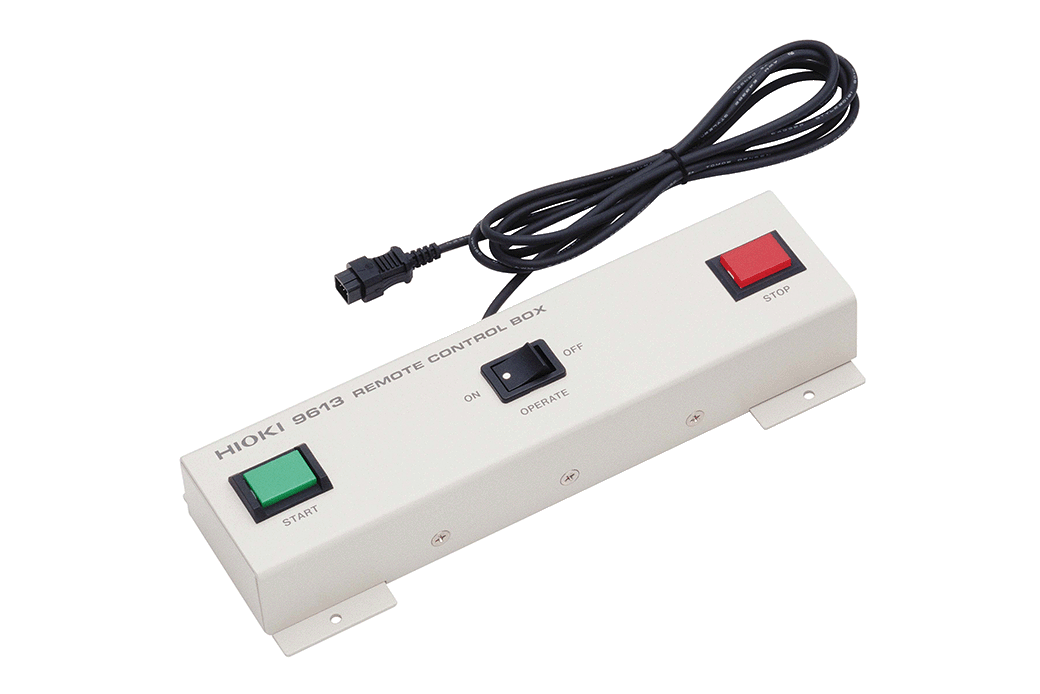
For start/stop control, one-handed, 1.5 m (4.92 ft) cord length
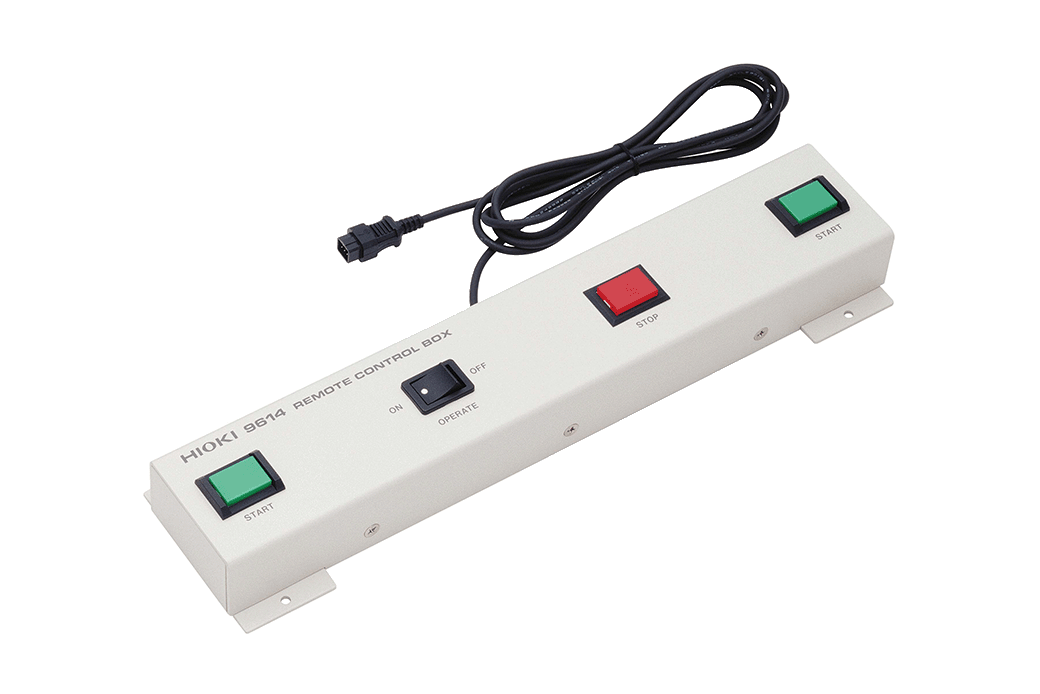
For start/stop control, double-handed, 1.5m (4.92 ft) cord length
Communication Cable & Interface (4)
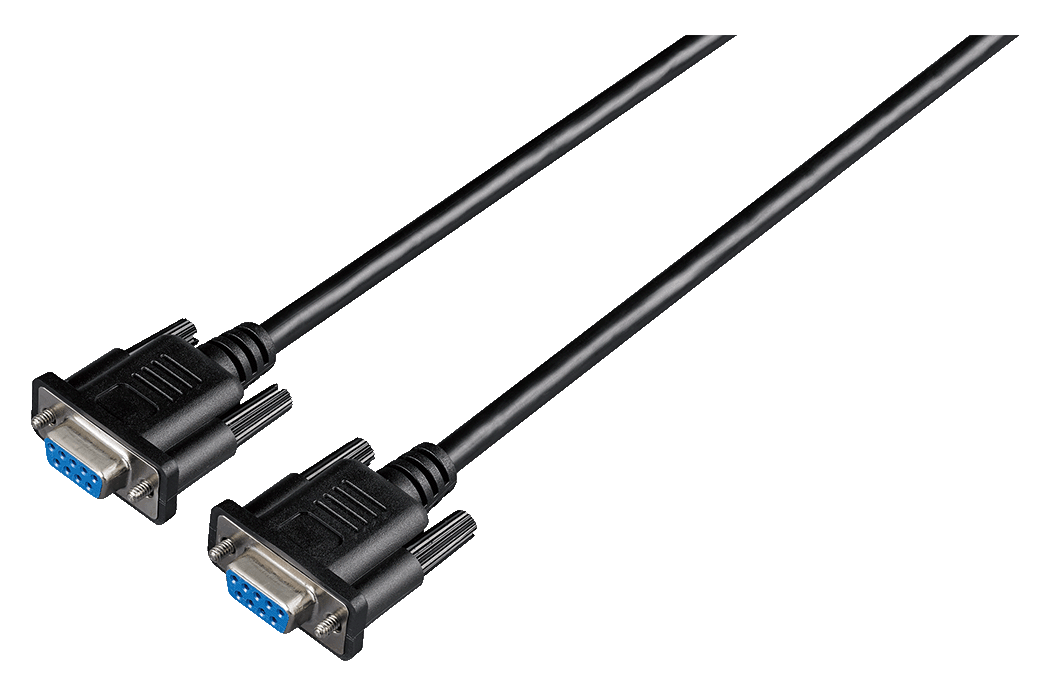
• For external control
• Double shielding
• 9-pin/9-pin, Cord length 3 m (9.8 ft.)
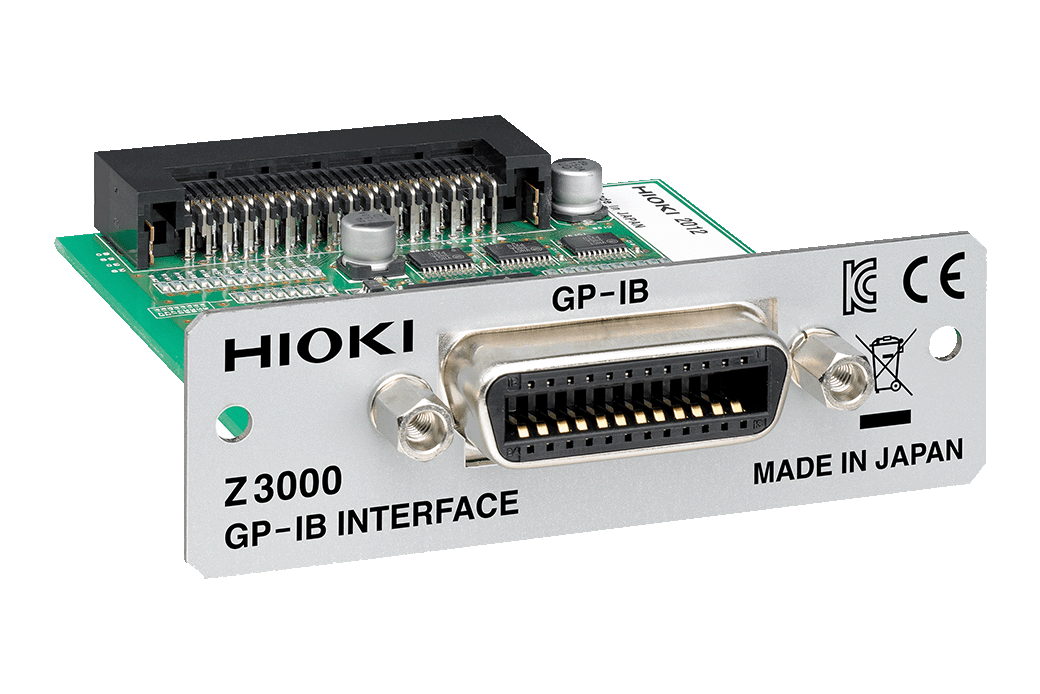
For external control
For external control
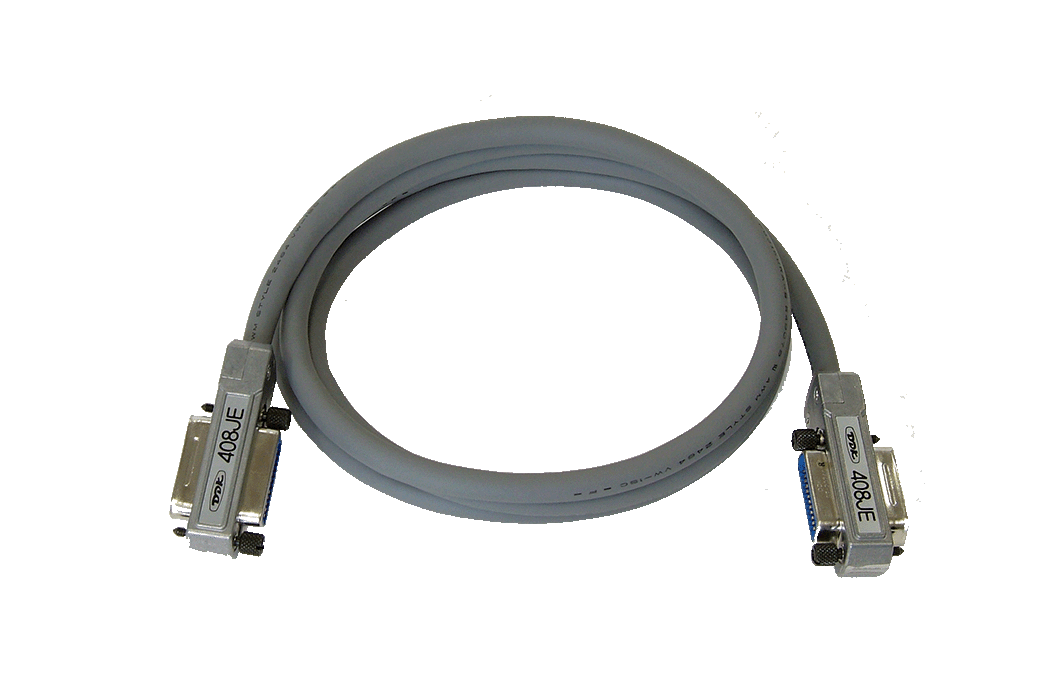
2 m (6.56 ft) length
Replacement Parts (2)
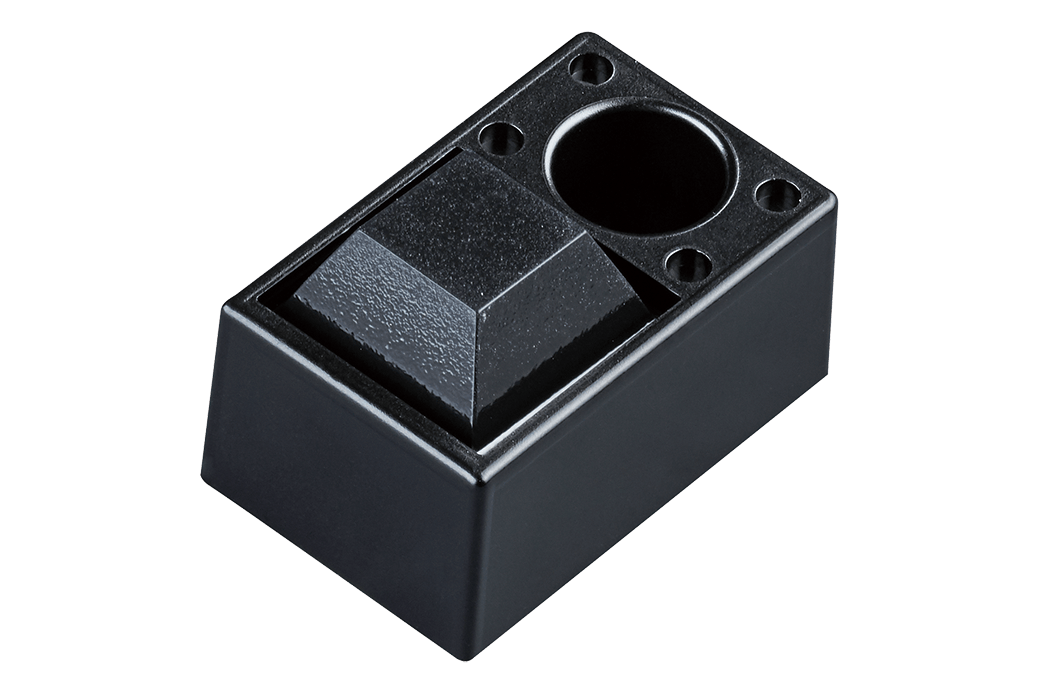
Order Code: Z7053
Single piece
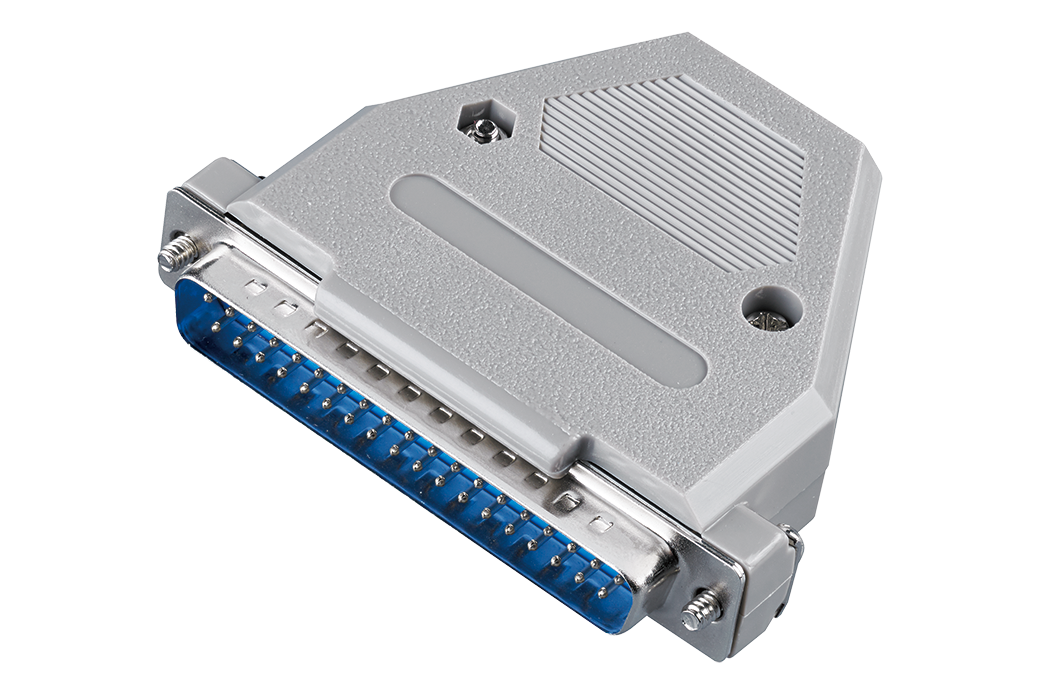
Order Code: Z7054
-
DC HIPOT TESTER ST5680A
 Test Report
Japanese
Test Report
Japanese
English Ver.01 -
DC HIPOT TESTER ST5680A
Instruction Manual
Korean
Ver.01
-
DC HIPOT TESTER ST5680A
Instruction Manual
Simplified Chinese
Ver.01
-
DC HIPOT TESTER ST5680A
Instruction Manual
English
Ver.01
-
DC HIPOT TESTER ST5680A
Communications Command Instruction Manual
English
Ver.00
-
DC HIPOT TESTER ST5680A
Startup Guide
Japanese
English
Simplified Chinese
Korean Ver.01
-
DC HIPOT TESTER ST5680A
Ver.01